Is Your Electrical Panel Ready for Solar?
Solar-ready or not? We break down busbar ratings, the 120% rule, and 2026 upgrade costs so Woodstock homeowners know before they sign a solar contract.
If your home has a 200-amp panel with a 225-amp or higher busbar and open breaker space, it is almost certainly ready for solar. If it is a 100-amp panel, a fuse box, or a 200-amp panel with a 200-amp busbar, you will need an upgrade before any solar installer can legally tie in. That is the whole answer. The rest of this post explains how we verify it, what the numbers mean, and what it costs in Woodstock in 2026.
We run this check dozens of times a year for homeowners who signed a solar contract before anyone looked at the panel. Knowing whether your electrical panel is ready for solar in Woodstock GA before you sign saves you money, delays, and a lot of finger-pointing between the solar company and the electrician.
The Short Answer: Most Woodstock Panels Need Work First
Roughly six out of ten homes we inspect in Woodstock need some panel work before solar interconnection. The split usually comes down to when the house was built. Homes in Electrical Panel Upgrade in Towne Lake and other subdivisions built in the 1990s and early 2000s often have 200-amp panels that pass, while older homes near downtown frequently have 100-amp or fuse-box setups that do not.
Here is the practical breakdown:
- 200-amp panel, 225A+ busbar, two open slots: solar-ready, no upgrade needed.
- 200-amp panel, 200A busbar: usually needs a busbar upgrade or a line-side tap.
- 100-amp panel: upgrade to 200 amps required for almost any residential solar array.
- Fuse box: full conversion required, no exceptions.
Solar panel electrical panel Woodstock projects are not complicated once you know which category you fall into. The problem is that most homeowners do not know until an electrician opens the cover and reads the label.
What Makes a Panel Solar-Ready?
A solar-ready electrical panel in Woodstock GA has three things: enough busbar capacity to accept the solar backfeed, at least two open breaker slots for the solar breaker, and a main breaker rating that satisfies the 120% rule. Miss any one of those and the utility will reject the interconnection application.
The busbar rating is the number that matters most. It is stamped on a label inside the panel door. A 200-amp panel with a 200-amp busbar has zero headroom for solar. A 200-amp panel with a 225-amp busbar has 25 amps of headroom, which covers most residential arrays up to about 6 kW. Anything larger and you are looking at a service upgrade.
Open breaker slots matter too. A typical solar backfeed breaker is a 2-pole 30A or 40A breaker. If your panel is full, you either need a subpanel or a panel replacement. We install subpanel installation Woodstock GA for homeowners who want to keep their existing panel and add solar capacity on a separate bus.
Busbar Ratings You Will See in Woodstock
Most panels in Cherokee County fall into four busbar categories: 100A, 125A, 200A, and 225A. The 225A busbar is the sweet spot for solar. It is common in panels installed after 2008, which covers a lot of the newer construction off Highway 92 and in the Ridgewalk area.
The 120% Rule and Why It Blocks So Many Solar Projects
The 120% rule is a National Electrical Code requirement that limits how much power can feed into your panel from both the utility and the solar system combined. The math is simple: your main breaker rating plus your solar breaker rating cannot exceed 120% of your busbar rating.
Here is how it plays out on a typical Woodstock panel:
- 200A busbar, 200A main breaker: 120% of 200 is 240. You have 40 amps of solar headroom. That is about 9.6 kW at 240 volts, which covers most 20 to 25 panel arrays.
- 225A busbar, 200A main breaker: 120% of 225 is 270. You have 70 amps of headroom. That handles almost any residential array.
- 100A busbar, 100A main breaker: 120% of 100 is 120. You have 20 amps of headroom, which is barely enough for a 4 kW system. Most homeowners want more.
If your array exceeds the headroom, you have three options: downsize the solar, upgrade the panel, or use a line-side tap. A line-side tap connects the solar ahead of the main breaker, which sidesteps the 120% rule but requires utility approval and a licensed electrician. We do these regularly, but they are not a DIY project.
How to Check Your Own Panel Before You Call Anyone
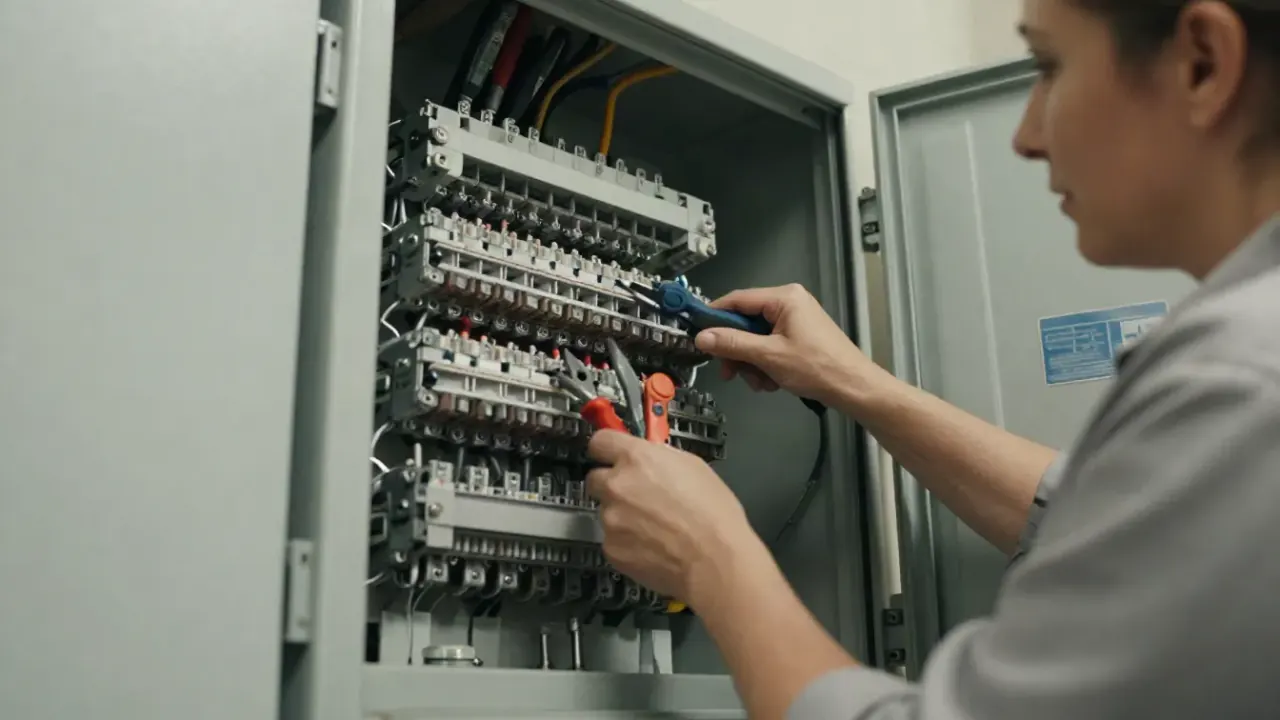
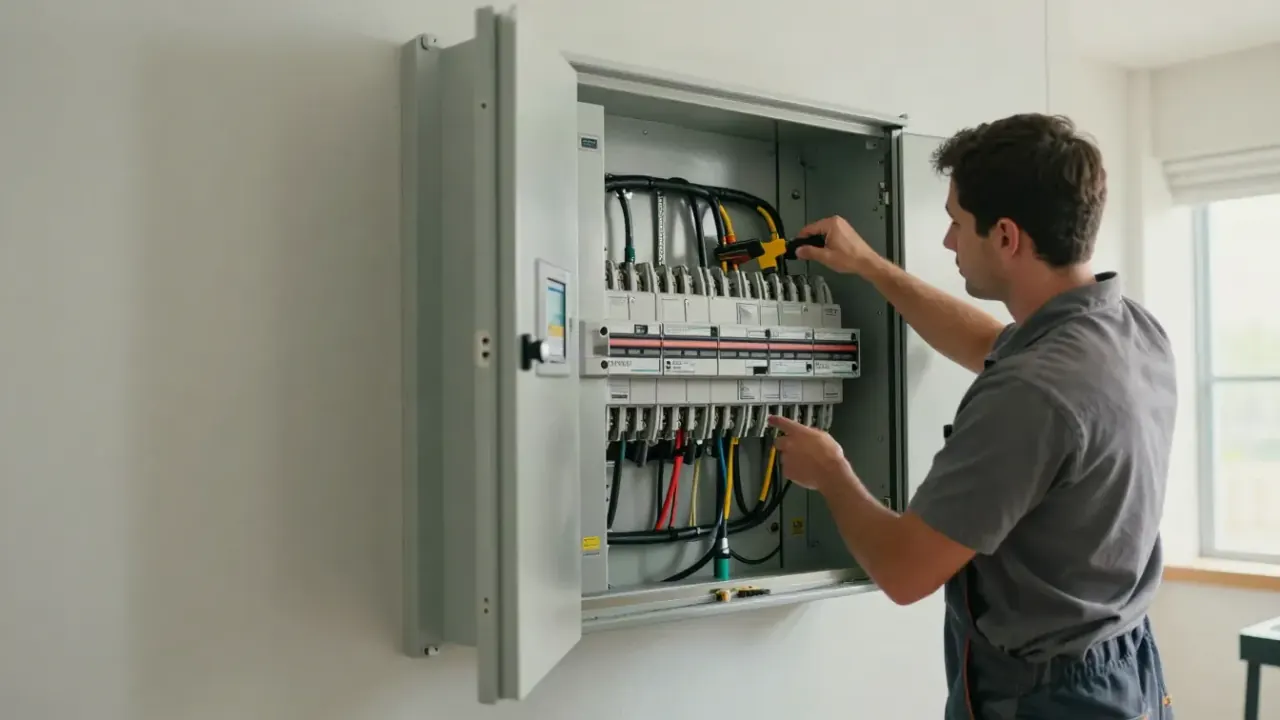
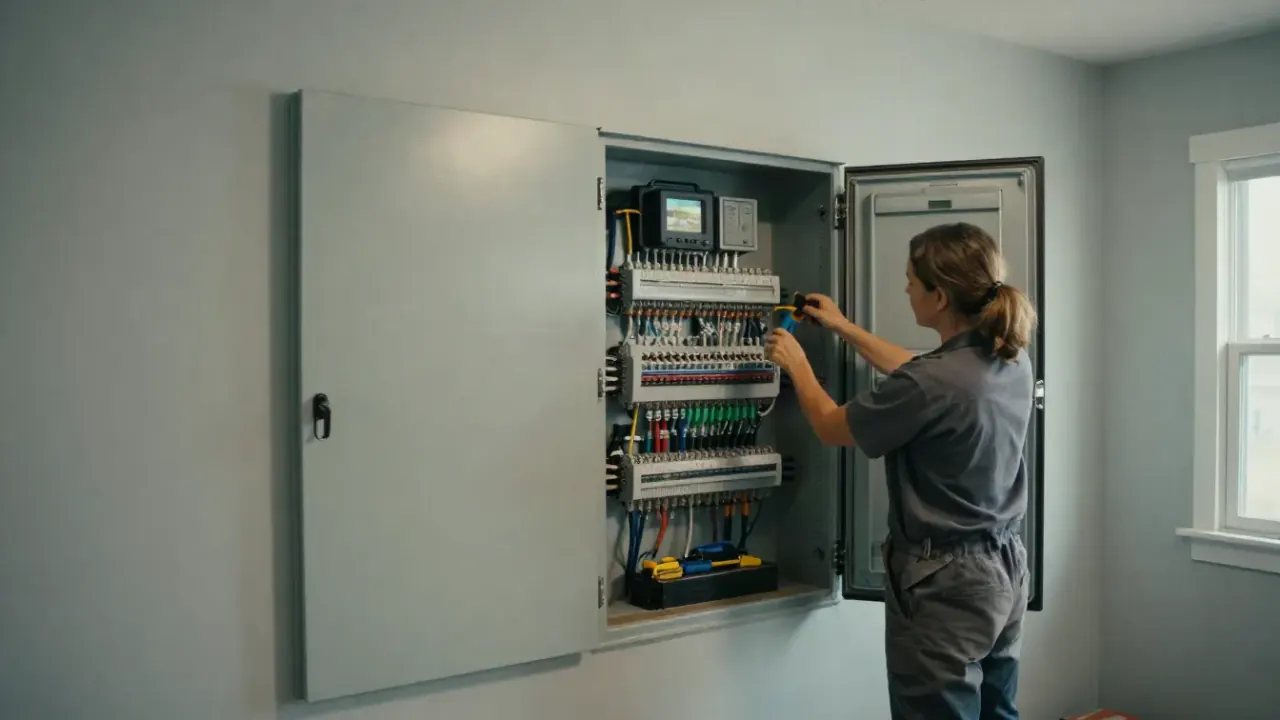
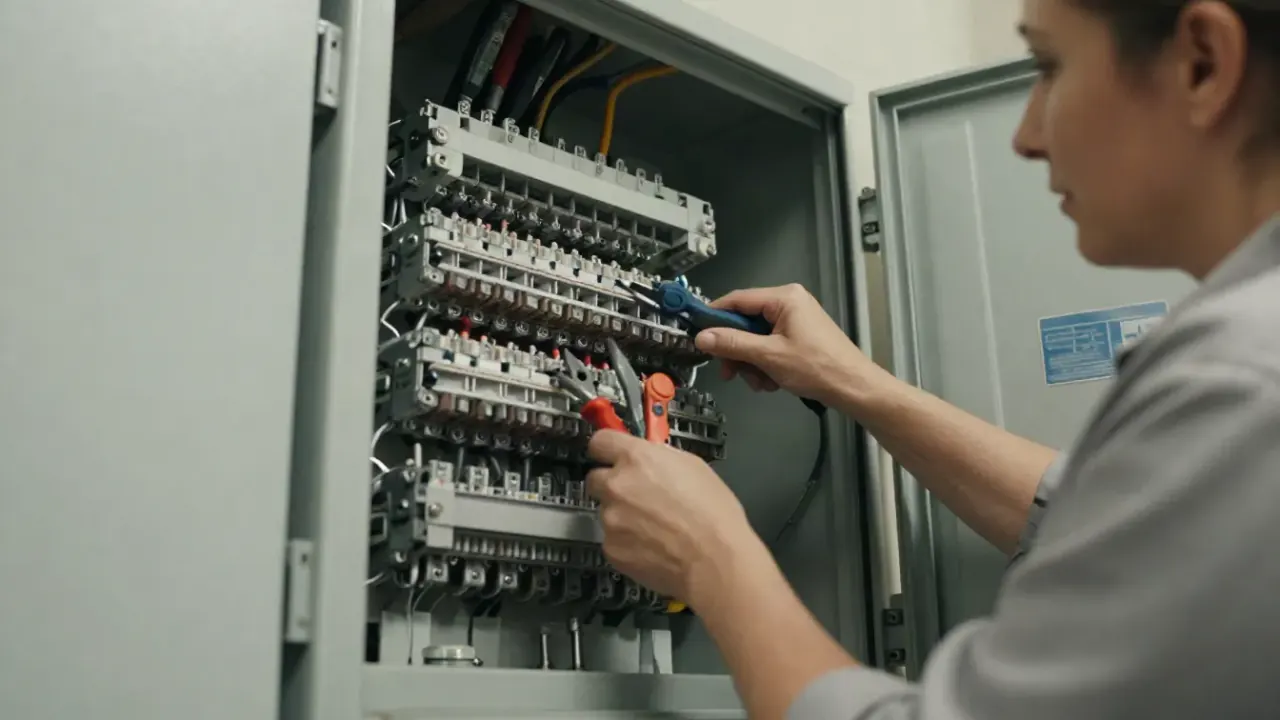
You can get a rough answer in about five minutes without touching anything live. Open the panel door, look at the label inside, and write down three numbers: the main breaker amps, the busbar amps, and how many open slots you have.
- Main breaker amps: the big breaker at the top, usually labeled 100, 150, or 200.
- Busbar amps: stamped on the label, often 200A or 225A.
- Open slots: count the empty spaces where a 2-pole breaker could go.
If you have a 200A main, a 225A busbar, and two open slots, you are in good shape. If any of those numbers are lower, you likely need work. Do not remove the dead front or touch any wiring. The main lugs are still live even with the main breaker off.
For a proper answer, we run an electrical panel inspection and load calculation Woodstock GA that accounts for your existing appliances, HVAC, EV charger if you have one, and the proposed solar array size. That calculation is what the utility wants to see on the interconnection application.
Do You Need a Panel Upgrade for Solar in Woodstock GA?
You need a panel upgrade for solar in Woodstock if your busbar is 200A or lower with a matching main breaker, if you have fewer than two open slots, or if your panel is a fuse box. Those three conditions cover about 60% of the homes we inspect.
The most common upgrade we perform is a 100 to 200 amp service upgrade Woodstock GA. It solves the solar problem and gives you headroom for an EV charger, a heat pump, or a shop out back. Most of these take a full day, including the utility disconnect and reconnect.
If your panel is a fuse box, solar is off the table until you convert. We handle fuse box to breaker panel conversion Woodstock GA for older homes near downtown and in the Deer Run area, where 1960s and 1970s construction is common. A conversion plus a 200-amp service upgrade is usually a two-day job.
One more thing to check: your meter main. If the meter socket is rated for 100 amps, it has to be replaced along with the panel. We see this on a lot of homes built before 1985. A service mast and meter main replacement Woodstock GA is often bundled into the same permit as the panel upgrade.
What It Costs to Prepare a Panel for Solar in Woodstock
Typical 2026 pricing in this area runs $1,800 to $3,500 for a 200-amp panel upgrade, $2,500 to $4,500 for a 100-to-200-amp service upgrade with a new meter main, and $3,500 to $6,000 for a fuse box conversion with a full service upgrade. Those ranges include the permit, the inspection, and the utility coordination.
Here is what drives the number up or down:
- Meter main condition: a rusty or undersized meter socket adds $600 to $1,200.
- Service mast height: if the mast has to be raised to meet clearance, add $400 to $900.
- Panel location: a panel in a finished basement or behind drywall costs more to access.
- Permit and inspection fees: Cherokee County and the City of Woodstock each have their own fee schedule, typically $150 to $350 combined.
Solar companies often quote the panel upgrade separately from the solar install. Ask them to include it in the same contract or get a standalone quote from us. Bundling usually saves $300 to $800 because we can coordinate the disconnect with the utility and the solar crew on the same day.
One cost homeowners forget: the utility may require a new meter or a production meter for the solar system. That is usually $200 to $500, paid to the utility, not to us.
Common Mistakes We See on Solar Panel Electrical Panel Projects
The biggest mistake is signing a solar contract before anyone checks the panel. We get called after the fact constantly. The solar company has already ordered equipment, the homeowner has already paid a deposit, and now the project is stalled for three to six weeks waiting on a panel upgrade and a new permit.
Other mistakes we see:
- Assuming a 200-amp panel is automatically solar-ready. It is not. The busbar rating is what matters, and plenty of 200-amp panels have 200-amp busbars with zero headroom.
- Ignoring the 120% rule. A solar installer who does not run the math will submit an interconnection application that gets rejected, and you eat the delay.
- Using a line-side tap without utility approval. This is a code violation and a safety issue. It also voids most homeowner insurance policies if something goes wrong.
- Skipping the load calculation. If you add solar and an EV charger to a panel that was already near capacity, you will trip the main breaker on a hot afternoon.
- Not upgrading the grounding and bonding. Older panels often have undersized grounding electrode conductors. Solar interconnection is the right time to fix it.
We also see homeowners skip whole-home surge protection Woodstock GA during a panel upgrade. It is a $300 to $600 add-on that protects the solar inverter, the HVAC board, and every sensitive device in the house. Given what a lightning strike in a Georgia summer can do, it pays for itself the first time.
When to Call a Professional
Call a licensed electrician the moment a solar company tells you the panel needs work, or the moment you see a 100-amp main breaker, a fuse box, or a full panel with no open slots. Those are the three signals that you are not solar-ready.
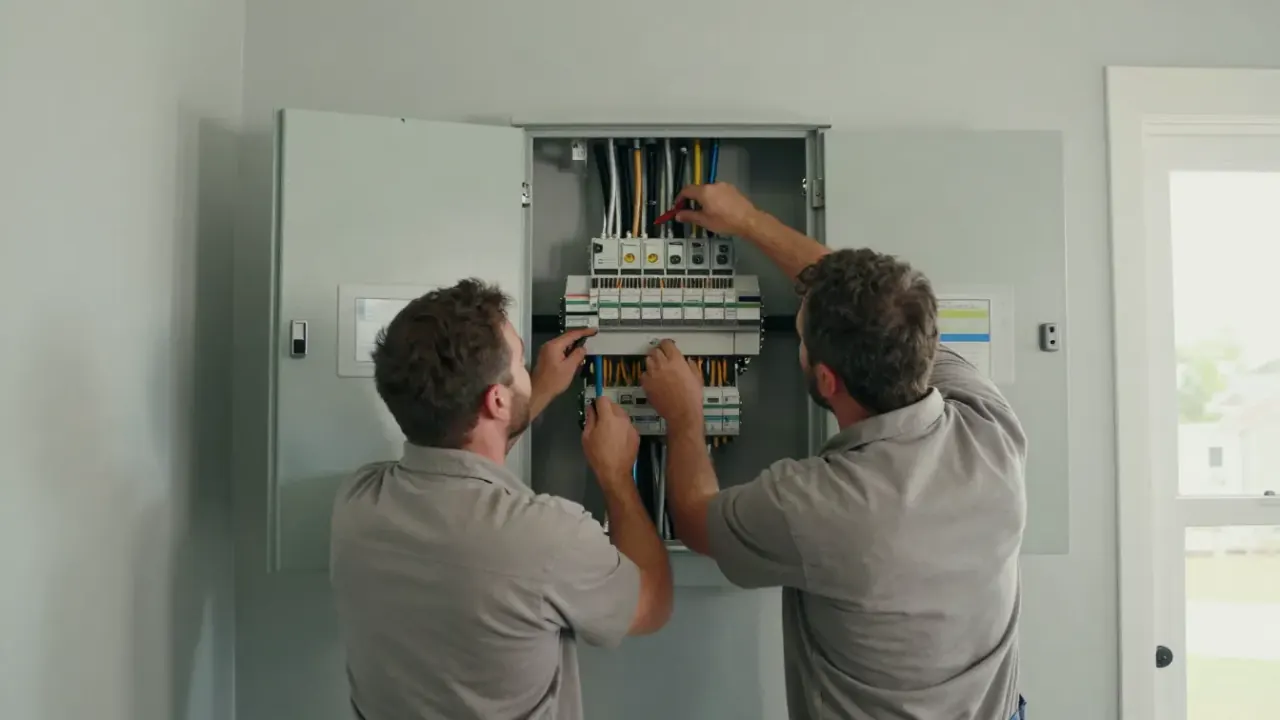
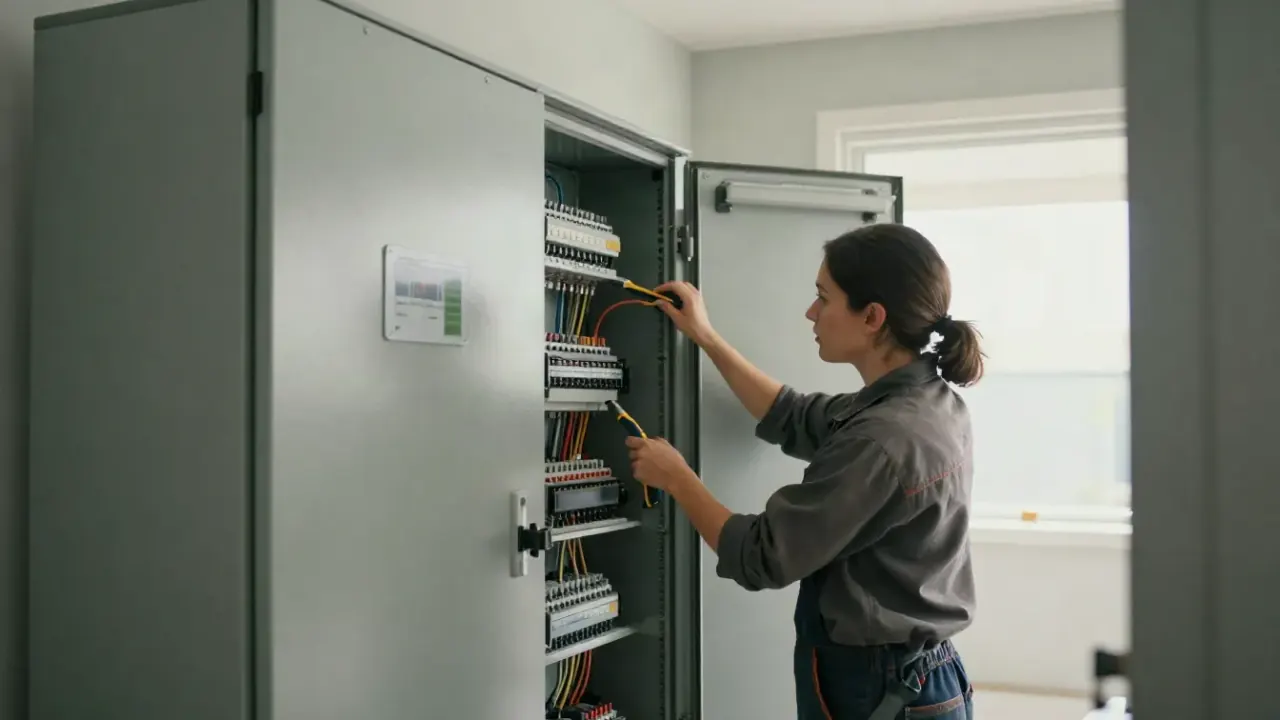
We handle the whole sequence: inspection, load calculation, permit, panel upgrade, utility coordination, and the final inspection. Our team works with solar installers across Cherokee County every week, so we know what the utility wants to see and how to keep your project on schedule. If you are in Electrical Panel Upgrade in Downtown Woodstock or anywhere in the 30188 and 30189 zips, we can usually get an inspection on the calendar within a few days.
If you are still in the shopping phase, start with the panel. It is the cheapest part of the project to get right and the most expensive part to get wrong.
Frequently Asked Questions
Is my electrical panel ready for solar in Woodstock GA?
It is ready if you have a 200-amp or larger panel with a 225A busbar and at least two open breaker slots. If your busbar is 200A or lower, or you have a fuse box, you need an upgrade before solar interconnection. We verify this with a load calculation.
Do I need to upgrade my panel for solar in Woodstock Georgia?
Yes, if your panel is 100 amps, has a 200A busbar with a 200A main, or has fewer than two open slots. Roughly 60% of the Woodstock homes we inspect need some upgrade. A 200-amp panel with a 225A busbar usually passes without work.
How much does it cost to prepare panel for solar in Woodstock GA?
Expect $1,800 to $3,500 for a 200-amp panel upgrade and $2,500 to $4,500 for a full 100-to-200-amp service upgrade with a new meter main. Fuse box conversions run $3,500 to $6,000. Those 2026 ranges include permits and utility coordination.
What size electrical panel for solar in Woodstock?
A 200-amp panel with a 225A busbar is the standard for residential solar in Woodstock. It gives you 70 amps of solar headroom under the 120% rule, which covers arrays up to about 16 kW. A 100-amp panel is too small for most systems.
Can I add solar without upgrading my panel?
Sometimes. If your existing panel has a 225A busbar and open slots, you can add solar with no panel work. If it does not, a line-side tap is an option, but it requires utility approval and a licensed electrician. Most homeowners find an upgrade is simpler.
Get Help with Electrical Panel Upgrade in Woodstock
We inspect your panel, run the load calculation, and tell you exactly what solar interconnection requires before you spend a dollar on equipment. If an upgrade is needed, we pull the permit, coordinate with the utility, and get it done.
Call Woodstock Electrical Panel Upgrade at (470) 742-0135 to schedule your solar readiness inspection.